TOO OLD…I DON’T THINK SO

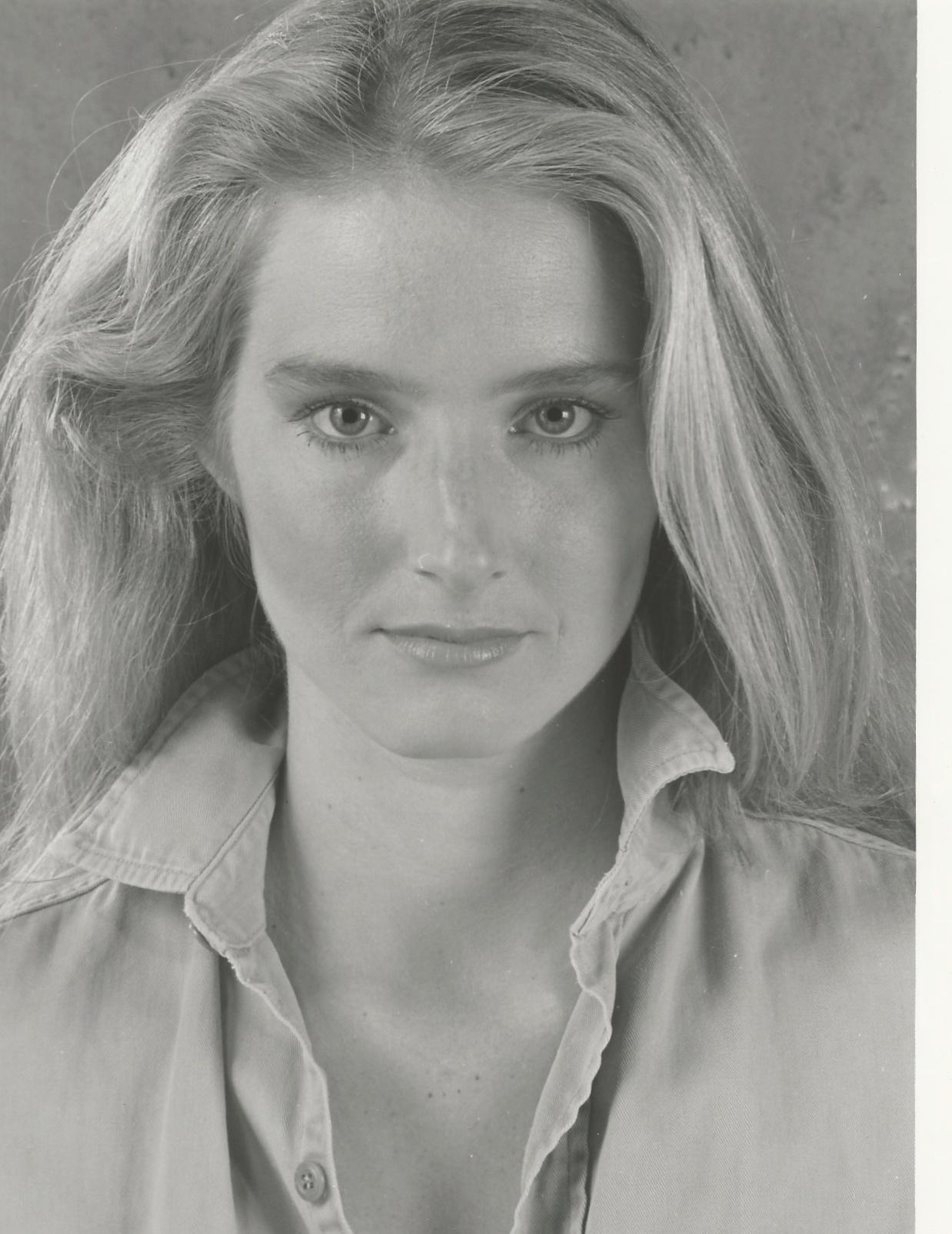
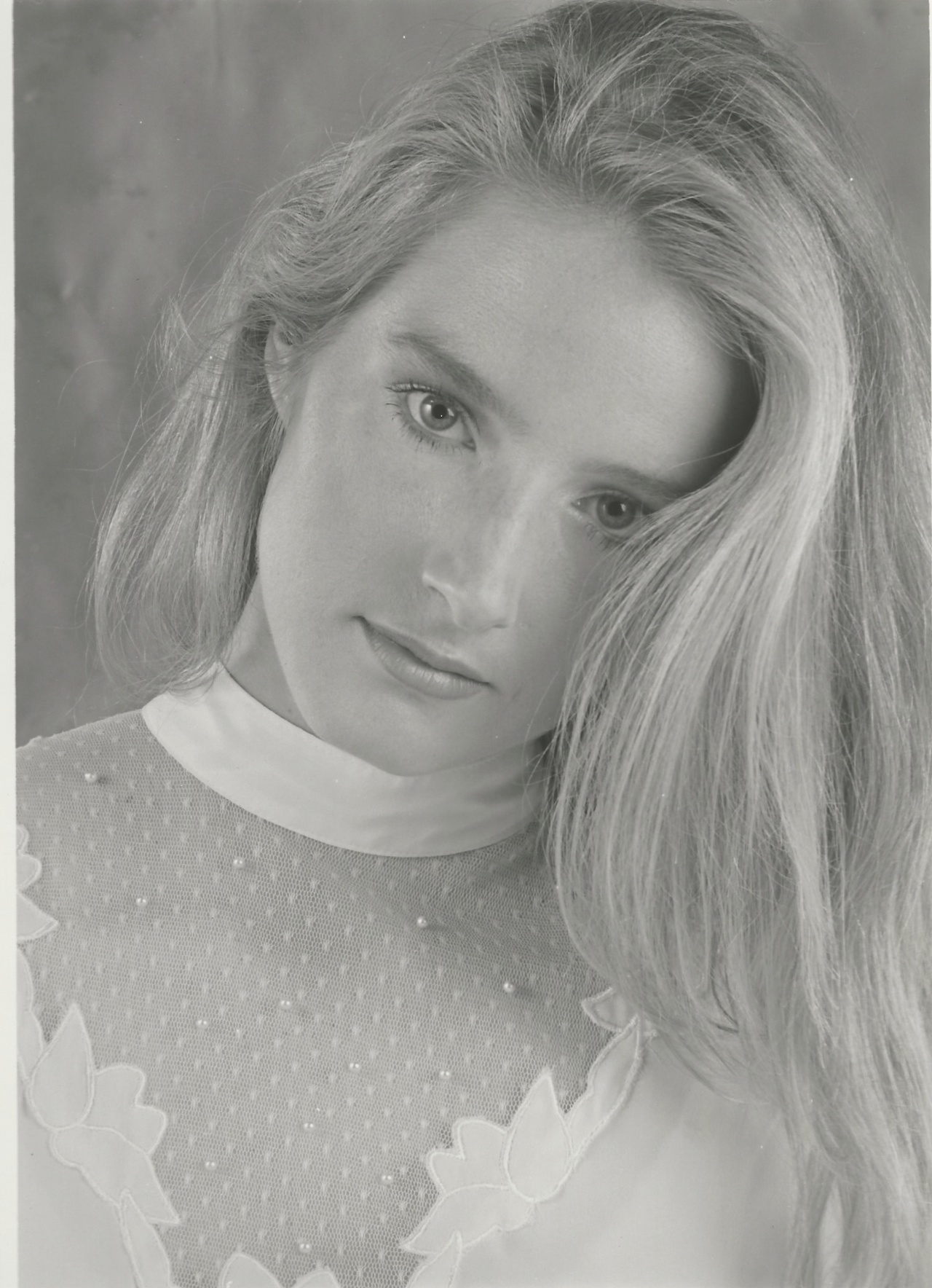
When I was twelve years old, I decided I wanted to be a fashion designer, an interior designer and a model.  Over the years I have actually done all three.  My road to becoming a model, though, was the most challenging.  First and foremost, which I did not realize at the time, was I had to ‘grow’ into my own face.  If you look at pictures of me as a teenager you can see clearly that I was not ‘fully cooked’ at that point.  When I was 19 I dated, if not THE, than at least one of the top male models in the world.  He told me then that I could be a model.  It took me 8 years to really believe him.  I tried when I was 23, which is even considered old for a model.  I was living in Atlanta at the time and Elite/John Casablancas had an agency there.  I met with John and he told me that they would be happy to represent me after I got my nose fixed.  (I had broken it at a swim meet when I was 14.) What you have to keep in mind here was that at that time in the modeling business, perfection, or at least what was considered ‘perfect’ was the driving force, and a crooked nose wasn’t it.  I refused to fix my nose because I thought it was silly.  It wasn’t like it was sideways on my face.  This, however, did make me question myself and why I ever thought I could be a model.
Scan

What you also must understand is I grew up being told by my brothers that I was fat and ugly.  Even my mother used to call me a big, fat walrus.  Years later when I asked my mother about this, she told me that she thought I knew she was kidding, that I was a skinny little girl, so why would I believe what she was saying?  Ah, the power of words…good and bad.  Why would I believe anything else?  So, I had that going for me, too.  After I had shot with a photographer, a real fashion photographer, and had these beautiful (I thought, anyway) pictures, I showed my brother Michael, and he said, “You are still ugly.”  I did not really think I was ugly, because outside of my family I definitely had a more positive experience.  Still, when you are told something every day of your life, doesn’t matter if it is true or not, you believe it to be true.  And it took me years to stop believing it.

Fast forward 3 years and we are now living in Chicago.  I am doing a lot of television and film work and cannot let go of the idea of being a model.  So I gather the photos I had from  years earlier and make the rounds of the agencies in Chicago.  Keep in mind, I am now 26 years old.  At one particular agency, the booker is looking through my portfolio, flipping the pages and making noises like she approves.  She then asks me how old I am.  I say, “26.” She slams my book shut, hands it across the desk to me, and says, “You’re too old.”  I thought she was wrong, and an idiot, but I took my book and left the agency.  The next one on my list did not take walk-ins, so I mailed my headshot and waited to hear.  In about a week, I received a call.  (Remember I was married and we were living with my in-laws as we were saving to buy a house.)  My mother-in-law answered the phone and proceeds to tell the caller that she isn’t sure how old I am, but that I am married to her son, and he’s 27.  Oh, great, I think.  But this agent thought I was about 14 from my picture and wanted me to come in to meet her in person.  From that point on, I mostly lied about my age.  So ridiculous, but so necessary in a business that loves really young girls.
Scan 3

I sign with this agency and start shooting with lots of different photographers to build my portfolio.  About six months later, with a completely new book, and now 27 years old, I go back to the agency that told me I was too old.  (I knew she’d never remember me, and I was right.)  I was not what was called exclusive with my agency, so this wasn’t against the rules.  This agency, though, specialized in runway more than anything else, and I thought I might like to do runway.  So, the agent is looking through my new book, and as before is making noises like she likes what she is seeing.  She then looks up at me and says, “How old are you?”  I say, “21.”  And she says, “Here, fill this out.”

In the summer of 1987, an agency from Milan comes to town, looking for girls to take to Italy.  I am one of those chosen.  A couple of weeks later, a German agent arrives and when he asks me how old I am, I tell him 21, which is what my agent told me to tell him.  He likes me and my look and I am again one of the girls chosen to go to Europe.  In the end, we decide Germany is a better market for me.  My ticket is made for September and a week later another girl from my agency will be joining me, and we will live together.  Everything is set up through the agencies, both in Chicago and in Hamburg.  Here I am, 27 years old, never having been out of the country other than to Baja when I was 20, going off to Europe to model!  It was a very exciting time, and I was scared to death.  Although I had taken German in high school, you couldn’t really say that I spoke the language.  The first week I was there, I was on the phone every day with my husband, crying that I wanted to come home.  Luckily, he understood that I was just scared.  It took me a week to adjust, and by the time Jan Marie arrived, I was fine, loving it, in fact.

To be continued…

PILLARS OF THE EARTH

So far all the books I’ve written about and/or have recommended have been in the genre of spiritual or self-help.  Today’s book is “The Pillars of the Earth” by Ken Follett.  It was originally published in 1989, but I did not read it until around 2005, maybe 2006.  I had heard about it for years, and as a matter of fact, it is one of my cousin’s favorite books.  Still, in spite of high praise, from various people, the subject just didn’t interest me.  Or so I thought.  I literally read the book in 3 days, and it is 1000 pages long.  I was sick and in bed and had nothing else to do, so I read.  I loved it from the first sentence, which is, “In a broad valley, at the foot of a sloping hill, beside a clear bubbling stream, Tom was building a house.”  Why this sentence hooked me, I can’t say.  It did though, and I tore through the book.  I LOVED it!

Screen Shot 2014-12-13 at 5.30.43 PM

According to Amazon,  the dust jacket notes: “Ken Follett is known worldwide as the master of split-second suspense, but his most beloved and bestselling book tells the magnificent tale of a twelfth-century monk driven to do the seemingly impossible: build the greatest Gothic cathedral the world has ever known. Everything readers expect from Follett is here: intrigue, fast-paced action, and passionate romance. But what makes The Pillars of the Earth extraordinary is the time – the twelfth century; the place – feudal England; and the subject – the building of a glorious cathedral. The author has re-created the crude, flamboyant England of the Middle Ages in every detail. The forests, the walled towns, the castles, and the monasteries become a familiar landscape. Against this richly imagined and intricately interwoven backdrop, filled with the ravages of war and the rhythms of daily life, the master storyteller draws the reader irresistibly into the intertwined lives of his characters – into their dreams, their labors, and their loves: Tom, the master builder; Aliena, the ravishingly beautiful noblewoman; Philip, the prior of Kingsbridge; Jack, the artist in stone and Ellen, the woman of the forest who casts a terrifying curse. From humble stonemason to imperious monarch, each character is brought vividly to life. The building of the cathedral, with the almost eerie artistry of the unschooled stonemasons, is the center of the drama. Around the site of the construction, Follett weaves a story of betrayal, revenge, and love, which begins with the public hanging of an innocent man and ends with the humiliation of a king. At once a sensuous and endearing love story and an epic that shines with the fierce spirit of a passionate age, The Pillars of the Earth is without a doubt Ken Follett’s masterpiece.”

And as if this wonderful book was not enough, the follow-up book called “World Without End” came out in 2007.  Because I loved “The Pillars of the Earth” so much, I was a little afraid I would be disappointed by the new book.  I am happy to say that was not the case.  This time around, though, I chose to listen to it instead of reading it.

Again from Amazon – “In this “epic” (The Denver Post) sequel to “The Pillars of the Earth,” it is now two centuries after the townspeople of Kingsbridge have finished building its exquisite Gothic cathedral. And on a cold November day, four children slip into the forest and witness a killing—an event that will braid their lives together by ambition, love, greed, and revenge….”

I highly recommend these books.  Even if you think the subject matter is of no interest to you (as I did), Ken Follett writes in such a way that draws one in and doesn’t let go until the very last word.

A BETTER CHRISTMAS


I hesitate to say that the Christmas of 1983 was my best Christmas ever, but it certainly was up there on the list, and, really, I can’t name one that was better.  So, I guess, by default, it must be my best.  If you read my last post, you know my experience of Christmas over the years wasn’t so great.  Before I get into the details of what happened in 1983, I need to give you a little background.

On 29 October 1983 I got married.  I was 23 and my new husband had just turned 24 a few weeks before.  We should never have gotten married, and as it turned out, when we were divorcing 4 years later, if came out that he didn’t want to get married either.  We just did not know how to not go through with it.  At the time, though, it seemed like the thing to do.  I was living in Athens, going to the University of Georgia and hating every minute of it.  After moving to California in 1980 to establish residency so that I could go to UC Santa Cruz, I had decided to move back to Georgia (I do wonder sometimes how my life might be different if I’d stayed and gone to school out here.)  I was living at home, which at the time was in Canton, a town north of Atlanta.  I had no friends there because I had never lived in this town, and everyone I knew from high school was away at college.  I was working and trying to figure out where/what I wanted to do.  I decided I wanted to go back to school in Boston and chose Boston University.  My mother said, “Too expensive.  Pick another school.”  I had it in my mind that I wanted to be in New England, though I had never been at that point.  Since BU was out, I settled on University of New Hampshire.  I applied and was accepted, but wouldn’t be starting until the next fall, which was about 10 months away.  One day my mother said to me, “Why don’t you go to Georgia?”  Me, with no doubt a horrified look on my face and incredulity in my voice asked, “WHY?”  She said, “So you can get out of my hair sooner.”  I thought, okay, not what I want to do, but obviously she doesn’t want me around, so I applied and got into UGA and started winter quarter, which was January 1982.

I hated it from the very first moment.  Let me make that more clear – I HATED IT.  I was older than a lot of the kids, it was a giant school, my classes were huge and worst of all, I was bored.  So I got a job at Macy’s, part-time.  I figured I may as well get paid while I’m miserable.  That’s where I met my future husband, a year later.  He was a sales manager in housewares, and since I was what was called a floater, working in whichever department needed me, I eventually worked for him.  This was in January 1983.  We started dating, got engaged in June and got married in October. I guess you could say it was a whirlwind courtship..  But as I already said, neither of us really wanted to go through with it and did it anyway.

old family pictures-10


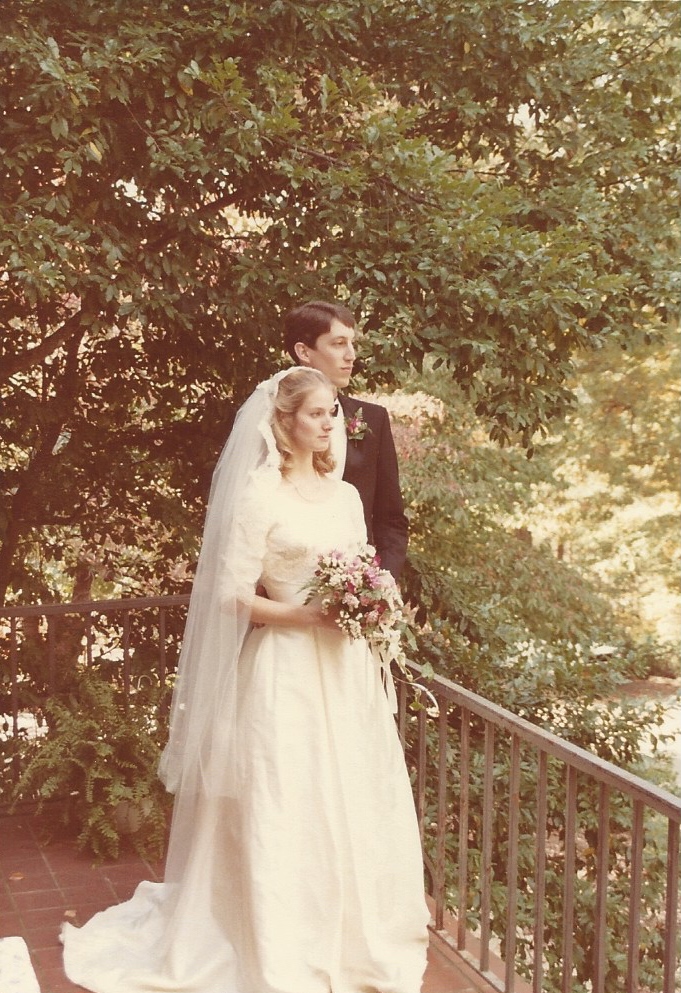
By the time we got married, my husband-to-be had been promoted to assistant buyer and we had moved to Atlanta, actually Clarkston.  I so clearly remember being walked down  the ‘aisle’ (we got married outside and it had rained the night before and the ground was still wet and my heels kept sinking in the grass with each step) and saying under my breath to my step-father, “I don’t want to do this; let’s go the other direction.”  I’m sure he thought I had cold feet, but nothing more.  He had no idea I was actually serious.  Even before we had gotten to this point, my mother had come into the room where I was finishing getting ready and said to me, “You don’t have to do this.”  All I could think was, ‘Really?  You’re going to go out there and tell all those people to leave, that I changed my mind?  I don’t think so.’  And so, I went through with it.

And now the good part – for Christmas that year, my brand new husband did the 12- Days of Christmas for me.  He knew I wasn’t fond of Christmas; okay, I pretty much hated it, but he was determined to change my mind and give me a Christmas that I might actually love.  Although now I do not remember the specific gifts he gave me, I still do remember that it was the first time I really enjoyed the holiday.  So beginning on the 14th, and ending on Christmas Day, he gave me a gift or gifts each day.  None was overly expensive or extravagant and he did his best to follow the song without literally giving me what the song said for that  particular day.  The only gift I remember was, I think, Day 8, when he gave me 8 crystal ornaments for the tree.  Or maybe it was Day 12, and there were 12 ornaments.  In any case, it was a fun and clever way for him to make my Christmas merry.

Today, Christmas is still not my favorite time of the year.  There always seems to be so much pressure.  I do my best to let it not get to me.  Don’t get me wrong, I do like aspects of it–the ornaments and twinkly lights (not that I actually decorate, though I do have lovely ornaments and such)–but the reality is just so much work, and because I am always working to get jobs finished before Christmas, and am super busy, I don’t feel like I have time to get into it fully.  And then it’s over.

Over the years, even though it wouldn’t be original, I have contemplated doing the 12- Days of Christmas gift giving for someone else, and, yet, it has never happened.  I do love the idea and maybe one of these years I’ll do it.

THE PATH TO LOVE

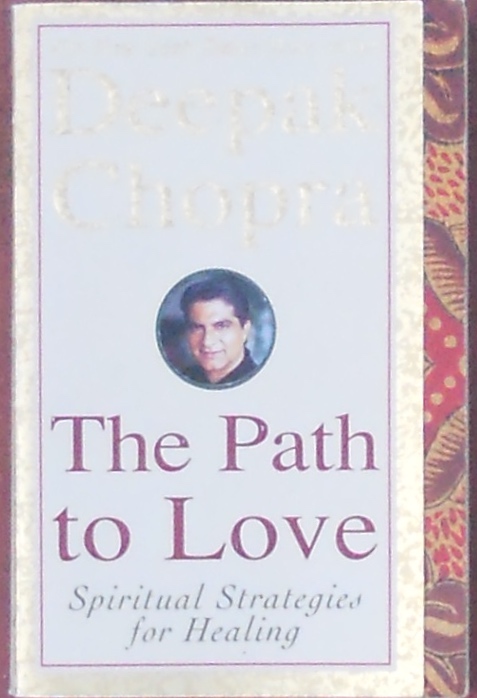
I read “The Path to Love,”  by Deepak Chopra, the first time after a breakup.  It wasn’t just any breakup; no, it was a heart-squooshing, blindsided, out of nowhere, walk-90-miles-a-week just to try to get my equilibrium, if not back, at least, well, not so off-center type of breakup.   What made this even more difficult was the fact that I was truly and completely ready to be in a relationship, probably for the first time in my life.   I had gone through a bunch of really challenging stuff over the several years previously, and realizing that I needed to do some, okay, a lot, of work on myself, and that meant taking a step back from even the thought of dating, let alone a serious relationship.  It took 18 months, but I was ready.  Then I met M, and though my very first impression was, he’s too old for me, after spending approximately an hour or so with him, when we said goodbye, and I saw his eyes for the first time (just so you can understand why it took an hour to actually see his eyes, we met in the dark to walk and by the time we finished, the sun was up), I thought, uh, oh, I’m in trouble now.  I did not, at the time, realize just how prophetic that thought was.

I won’t go into much more detail here now because this post is about a book, and the reason it was so important for me to read when I did.  Suffice it to say that I had gone into this relationship with a completely (COMPLETELY) open heart, and that it truly did make all the difference.  So, after M lost his mind and got his head stuck up his ass, after my heart was thoroughly squooshed, it was all I could do not to slam my heart shut again.  I mean, if this was what happened when I/it was open, why in the world would I want to stay that way?  I did want to, though, and I knew that I had to do whatever it took to keep my heart open.  And that’s where this book came in quite handy.

DSCN3724

(Sorry the picture isn’t better.  Deepak’s name is in gold lettering and flash or no flash, it washed out in the photo.)

This book was originally published in 1997, and as with most of the books I’ve been posting about, I do not know how this book came to be in my possession.  I think I had it for many years before I ever read it.  I read it when I needed to hear its message.

As Deepak writes in the final paragraph of the book:  “The love you seek is seeking you at this moment.  Your longing, your deep fantasies about being loved are mere shadows of the melting sweetness that makes spirit want to love you.  Be honest about your seeking, and be alert to the moments when love is showing itself to you.  You are the only means that love has for conquering its opposition; therefore, you are infinitely precious in the eyes of spirit.  The messages of love may not be clear to anyone else around you, even those most intimate to you.  That doesn’t matter; they are meant for you and you alone.  Be assured of that.  And above all, keep looking for clues.”

MY WORST CHRISTMAS EVER

When my brothers and I were teenagers, come Christmas time, my mother asked us to make a list of what we wanted.   Did she want us to feel like we had some kind of a say in what we ultimately received?  Was it just something for us to do?  I never understood why she had us do this, since she never got us what we asked for.  And it wasn’t like I/we would ask for outrageous gifts.  It wasn’t like we got the Neiman Marcus catalog and chose the most expensive, ridiculous items offered.  No, and I can only speak for myself here, I was always very careful about what I’d ask for, conscious of how much it cost and how easy it was to come by.  This did not seem to make a difference to my mother.  After several years of not getting anything I wanted, it finally dawned on me that we got what she thought we needed, so, really, there was no reason for us to be making a list.

I have never liked purses.  To this day, though they seem to be a necessary ‘evil,’ I still do not like them.   When I was in high school, and it became clear that something to carry the various things I needed was necessary, I used a backpack.  I was fine with this.  It never really got in my way since I could carry it on my back.  We are not talking about a real backpack here.  It was more a canvas sack with straps.  No matter, it suited me perfectly.

For Christmas of 1974, 40 years ago, I still had not figured out how things worked with my mother and so made the requested list.  I probably asked for a new pair of 501 jeans and something from Spencer Gifts, like a new black light and a poster to go with it.  What I did not ask for was a purse.  When I gave her my list, she made some kind of a comment about how I should ask for a purse.  That should’ve been a big, fat clue right there, but, as I already said, I had not yet realized what her M.O. was.  Since she mentioned it several times over the next few weeks, I specifically told her, “Mother, I do not want a purse.”

Come Christmas morning, I had a sinking feeling I was getting a stupid purse.  My feeling was not wrong.  Not only did I get the unwanted purse, but it was brown, which made it even worse.  I burst into tears and ran upstairs to my room, where I stayed for the rest of the day.  I was heart-broken, not only because I was given a stupid purse, but also because it was clear that my mother did not listen to me, that what I said just didn’t matter.  Once she decided I needed something, that was it, it simply did not matter if I wanted it or not.

While in my room, I hatched a plan for the following Christmas.  If my mother liked purses so much, then she could have mine.  I eventually went downstairs to the living room and retrieved that stupid purse and put it in my closet.  I cannot even remember what else I got that year because I was so upset about not being listened to.

I thought about that stupid purse all year-long, and by Christmas 1975 I was ready to get my ‘revenge.’  I got the purse out of my closet and wrapped it up all nice and pretty.  On Christmas morning, I had the camera all ready to take a picture of her expression when she opened her present.  It took her a minute to realize exactly what it was she was seeing, and when she did, she made a face.  I smiled sweetly and said, “I thought you needed a new purse.”  I am pretty sure she never used it, and she got better at listening to me.


Next week — one of my best Christmases.


THE ABUNDANCE BOOK

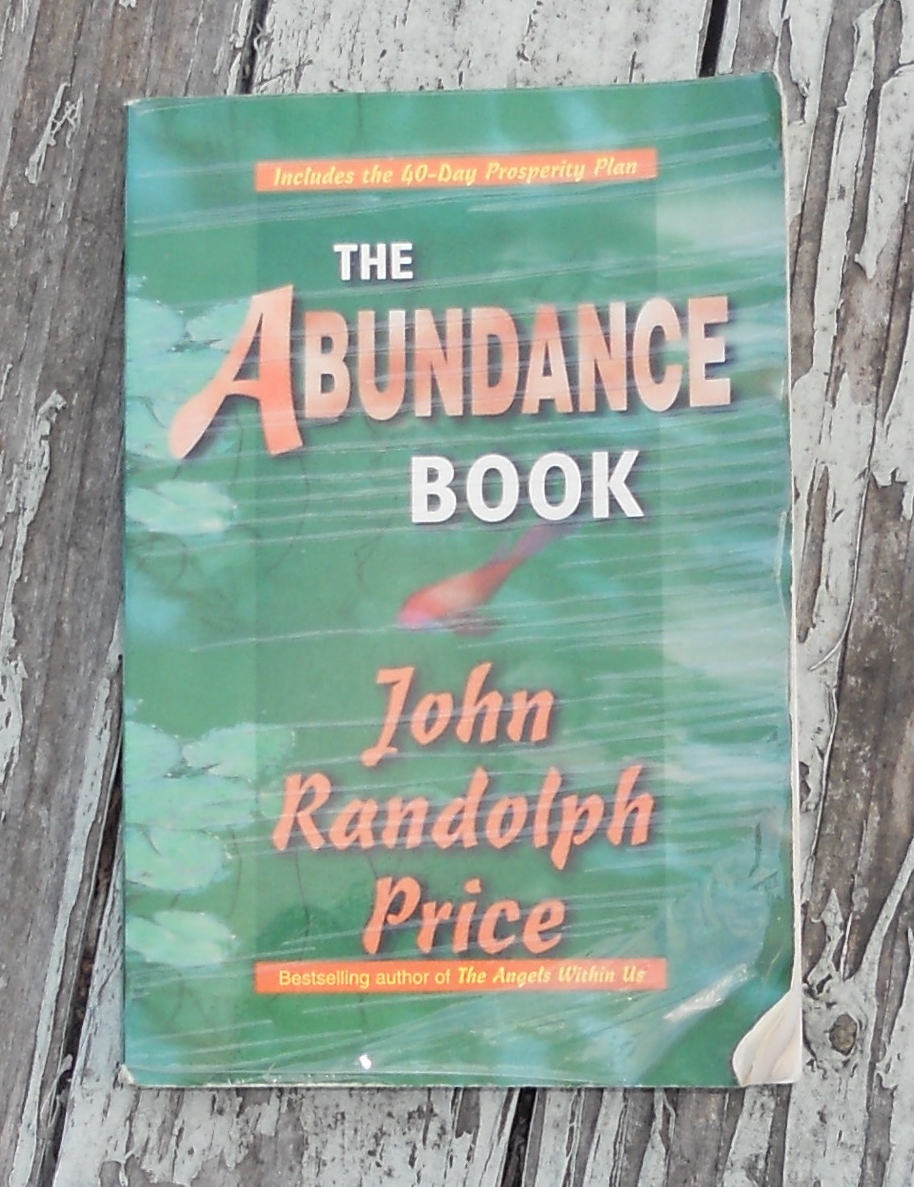
What this book lacks in size, it makes up for in its message.  As this is my copy, and I use it every day, please excuse the fact that it is slightly shabby.  I do not remember how I came to own this book, or how it came to own me, which is probably more accurate.  (Funny how all of the books I written about so far all fall into that same category, the one where, really, they ‘own’ me. )  Anyway, I’ve had this book at least 10 years and ever since the first time I read it, I’ve used the 40-Day Prosperity Plan on a daily basis.


DSCN3700


From the INTRODUCTION:

“Since the beginning of the civilized world, enlightened ones have taught that prosperity is a part of the natural process of life – that lavish abundance is the unquestionable nature of each individual.  And through the centuries, countless men and women accepted this truth, realized the law of plenty within and moved above the illusion of scarcity into the reality of unlimited wealth.  They proved for themselves that the energy of abundance is constantly radiating from the Source within and flowing out to appear as money and financial well-being.

What one has done, all can do.  The secret is to be aware of this unfailing principle, to understand that lack is simply the out-picturing of false beliefs, and to know that as you make the correction in consciousness, you will become a channel for the activity of ever-expanding affluence in your life.

This material certainly isn’t the last word on the subject of supply.  However, if you will practice the principles and dedicate yourself to opening the consciousness to the infinite riches within, it will not be long before you awaken to your divine inheritance.  And with each awakening, more of the error patterns of lack and limitation are erased from the collective consciousness.  The good of the whole does begin with each individual.”

Does it work?  Yes, I’d say it does.  As with anything, whatever we believe is true for us.  As the author, John Randolph Price says, “…the 40-Day Prosperity Plan is an effective process in changing consciousness from a vibration of limitation to one of abundance.”

Although John Randolph Price is the author of 18 nonfiction and 3 fiction books, this is the only one I’ve read.  He died this past July.  He was 82 years old.


AN ABUNDANCE OF GRATITUDE

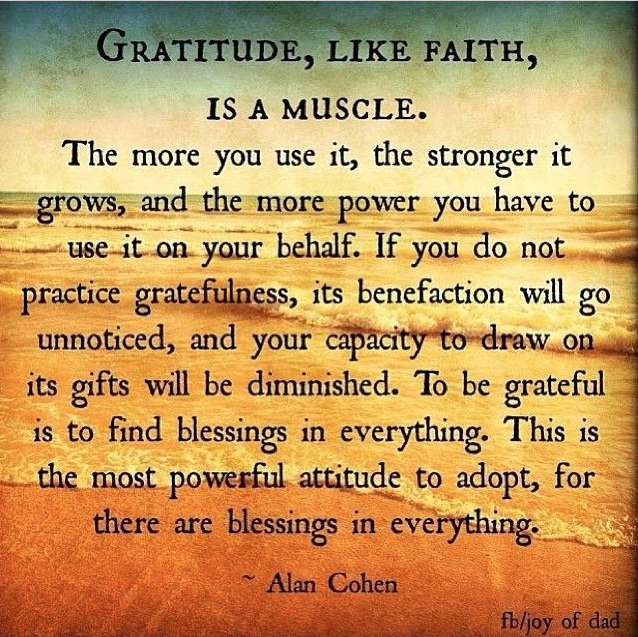
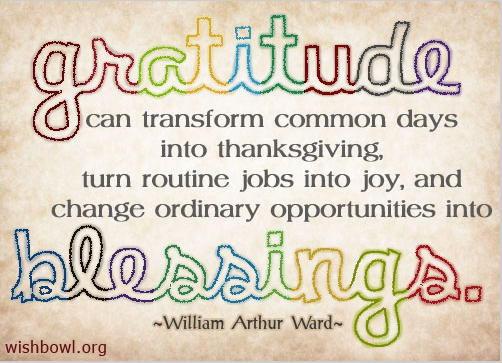
Although today is Thanksgiving (in the United States), I am grateful every single day of my life.  I have fought long and hard to get where I am.  It has been incredibly difficult at times, and I wondered on many occasions if I would make it,  BUT I have.  Each night before I go to bed, I write five things in my journal that I am grateful for that happened that day.  I’ve been doing this for a couple of years, and I have to admit, I look forward to it.  During the day, I am always on the lookout for things to be grateful for.  Some times it is something big and important; other times, it may be as simple as penny I find on the street.  Having an attitude of gratitude really does make a difference.

Screen Shot 2014-11-26 at 8.04.17 PM

Screen Shot 2014-11-26 at 8.02.45 PM Screen Shot 2014-11-26 at 8.01.57 PM Screen Shot 2014-11-26 at 8.00.56 PM Screen Shot 2014-11-26 at 8.00.08 PM


Screen Shot 2014-11-26 at 8.05.20 PM                             (the above artwork/poster was done by Jodi LeBlanc)


NO WORDS FOR JUST HOW DISTRESSING THIS IS TO ME

I am forgoing my usual book recommendation today to briefly address the latest news story…

“What the Cosby uproar says about how far we’ve come
Simply put, the facts haven’t changed — or at least not by much. But we have.
 By Lisa Belkin

This originally appeared on Friday, 21 November 2014 in Yahoo News:

Why did it take 30 years? That’s the question Barbara Bowman, one of the 15 women to level sexual assault allegations against Bill Cosby, asked in her essay in the Washington Post this week.  And it is a pivotal question, because the answers speak loudly to what has changed in our culture — and what has not — when a powerful man is accused of rape.
Cosby’s history of allegedly drugging young women and then forcing them to have sex has been an open secret in Hollywood for decades. The alleged rapes themselves are said to date back to the 1960s. Cosby has included jokes about drugging young women to make them amorous since 1969 — something called Spanish Fly played a surprisingly big role in the public imagination back then — jokes he repeated live to Larry King in 1991. The attempts by victims to make themselves heard began more than a decade ago.
Former model Janice Dickinson now says she tried to write about being assaulted by Cosby in her 2002 memoir but was convinced by her publisher, under pressure from the Cosby camp, to leave her most devastating accusations out. Tamara Green, a California lawyer, told her story on the “Today Show” in 2005 when she was only the “second Cosby accuser.” But there were no consequences for Cosby, and Matt Lauer all but apologized to viewers for doing the interview in the first place. The following year, 13 women were scheduled to testify to their separate tales of drugs and sex in a civil suit brought by Andrea Constand, but she settled with Cosby in 2006 for an undisclosed sum. Over the past two weeks the charges have snowballed, and Cosby has found himself on his heels as Netflix, NBC and TV Land all dropped planned projects featuring him or decided to stop airing some of his existing work.
The question is: Why now? What is it about this particular moment that has given this old news not only attention, but explosive, insistent, unrelenting traction?
The obvious but incomplete explanation is the Internet. Comedian Hannibal Burris was not the first to strike out at Cosby this fall, when in October he delivered a scathing standup routine calling the 77-year-old comedian a rapist. That honor went to the many reviewers of a biography of Cosby by former Newsweek editor Mark Whittaker, whose glaring omission of even a mention of the rape allegations in his 500-page book came in for withering criticism a month earlier. But the Internet was key, and the Cosby camp’s online response to viral video of Burris’ routine inadvertently fanned the flames, offering up a meme generator that, while meant as a way for viewers to show support (and to laugh off the charges as Cosby had successfully done in the past), quickly itself became a source of rape jokes.

But why did Burris’ comments go viral? Why did the Cosby rape meme take hold? What led so many to Share and Like and Comment in outrage when the very same charges had failed to resonate before?  Simply put, the facts haven’t changed — or at least not by much. But we have.

For decades, those who accused Cosby did so in the context of a world inclined not to believe them. Against a backdrop that saw “he said/she said” and deemed it just too complicated to sort out, and therefore looked away. At a time when good people, if pressed, would admit that they just couldn’t believe that a woman wasn’t somehow encouraging a man, particularly a powerful “catch” of a one.  Cosby, after all, wasn’t the only famous man we knew about but didn’t want to know.  Look at the allegations against singer R. Kelly, meticulously documented 15 years ago by the Chicago Sun-Times but essentially ignored by every other news outlet. And Lauer was not the only journalist who found it uncomfortable to air the Cosby charges. Atlantic writer Ta-Nehisi Coates, known for saying it as he sees it, profiled Cosby in 2008 and did not mention the allegations even though, he says now, “I believed Bill Cosby was a rapist.”  That Coates is publicly apologizing for his lapse now (“I don’t have many writing regrets. But this is one of them”); that the Village Voice is taking up the cause of R. Kelly’s alleged teenage victims anew; that Dominique Strauss-Kahn looks like he will actually stand trial, for “aggravated pimping,” after being repeated accused by women but not the legal system; that Canadian radio star Jian Ghomeshi was fired after several women said publicly that he’d sexually attacked them — all these are signs that something is different.

Now we accept that the football player who says “she fell and hit her head” can be proved wrong by the videotape. Now we have heard — really heard — the voices of too many college women telling us they don’t feel safe from their classmates on campus. Now we see the same facts differently. As Hanna Rosin wrote in Slate, “now that we know what we know, or, perhaps now that we know it at a time of heightened awareness about sexual assault….”
It is the way of history. Good people used to think one thing and then come to think something else. Often dismissed as political correctness, it is actually simple progress. And it is slow.  In the “we have come a long way but not far enough department,” there are still plenty of examples. Take the president of Lincoln University, Robert R. Jennings, who recently told a gathering of female students that rape allegations were too often lies by “young women who after having done whatever they did with young men, and after it didn’t turn out the way they wanted it to turn out, guess what they did? They then went to Public Safety and said, ‘He raped me.’” Jennings warned the women to remember that a rape charge could ruin a poor young man’s life because he might actually go to jail. That a man might actually have committed a crime and that the actual conviction rate for rapes on campuses is shockingly low seemed of little concern to Jennings.
That was in September — so stupidity and victim blaming are not completely relics of the past. But because of the Internet, students and parents easily shared the video (now there’s always a video) of Jennings’ speech. And because of the evolving public understanding of rape, there was outrage at that video, along with demands that Jennings resign. Add to that the new federal regulations that Jennings refers to, which give teeth to the requirement that schools report campus sexual assault charges to the authorities instead of continuing to handle them internally, and quietly.
There are growing expectations that Cosby should face consequences as well. Not legal ones, because the statute of limitations has expired, but perhaps other punishments, and pulling his body of work, past and future, from the airwaves is the first of those. TV Land’s decision means that 30 years after “The Cosby Show” debuted, nearly half a century after the first alleged incident, and more than a decade after the first public allegations were made, it became time for Cosby to pay a price.  He is still scheduled to appear in Florida tonight, but it’s a safe bet he won’t be making any Spanish Fly jokes. Times have changed. And so has the way his audience will hear him.”

I do have a lot to say about this, but, for the time being, I am still coming to grips with how to express what I really think about it.  For now, all I’ll say is my heart goes out to those women who have had to live with this for so long.

Something has got to change.


HERE, TAKE A PILL

Why is it, generally speaking, that Western medicine tends to throw pills at the symptom and not get to the underlying condition that may be causing the problem to begin with?  Is it because we are lazy and want a quick fix?  Is it decades of training doctors in a certain way?  Is it an inability to change with the times?  Is it fear of some kind?

Don’t get me wrong, I myself took an antidepressant because I needed it to get my chemical imbalance, well, balanced.  I suffered for years from depression and/or clinical depression, and it had gotten to the point that even though I so did not want to take it, I knew I had to.  I fought it for a long time, but when I was in Key West in the bright February sunshine, out of the frigid Chicago winter, and I was still feeling awful, I knew the time had come.  At the time, I was seeing a therapist and he recommended a psychiatrist to me.  I reluctantly went.  The deal was I would continue with my therapist and I would see the psychiatrist once a month.  I made sure my doctor knew from the very beginning that I had no intention of staying on the medication indefinitely.  I asked how long I would have to take it.  My doctor told me, and keep in mind this was in 1997, usually people took it for about a year, maybe a little longer.  I said, okay, but I’m not taking it any longer than that.

At the time I was trying to get pregnant and, again keep in mind it was 1997, at the time the only antidepressant that was approved for and that had been tested on pregnant women was prozac.  So that’s what I was given.  Pretty sure I’ve mentioned this before, but it nearly killed me.  Every bad side-effect it was possible to get, I got.   I know now I should never have been given it at all, since I am in the bi-polar spectrum, and prozac is a huge no-no.  Not sure if this wasn’t known back then or that my doctor just dropped the ball, in a way.  It doesn’t really matter.  What matters is I was closely monitored and switched to wellbutrin as soon as it became clear that I was on the wrong medication.

What I find astounding is the number of people, mostly women, who have been on antidepressants for years.  YEARS!  And they have no intention of ever getting off of them.  I understand that there are legitimate reasons for being on a drug long-term, maybe even forever; but, mostly, I don’t believe this to be the case.  (Bi-polar disorder is a different story and those with it should take medication, though many don’t/won’t.)  I could not wait to stop taking it, even after finding the correct one for me.  It was a hateful drug, and though it accomplished what I needed, the re-balancing my chemicals, I was not sorry when I no longer had to take it.

And these days the hottest new ‘disorders’ to be diagnosed with are ADD and ADHD.  In the November issue of Oprah, an article written by Anna Maltby addresses this phenomenon, and it is alarming.  “A groundbreaking report released earlier this year by the prescription management company Express Scripts stated that the number of adults in the United States taking ADHD medications (which include Ritalin and Concerta, in addition to Adderall) rose 53 percent from 2008 to 2012.  It also found that women are using ADHD medication at notably higher rates than girls, with those in the 26 to 34 age range posting a staggering 85 percent jump in the use of such drugs in just five years.” According to ADHD researcher Keith Connors, PhD, professor emeritus at Duke University and the creator of a highly regarded rating scale commonly used to help diagnose the disorder, “It’s clear that one reason for the recent rise is over diagnosis.”   He goes on to say that, “There is a swarm of primary care doctors and psychiatrists who really don’t know that much about ADHD but are willing to give out a prescription.”

According to webmd.com:

“Attention deficit hyperactivity disorder (ADHD) is one of the most well-recognized childhood developmental problems. This condition is characterized by inattention, hyperactivity and impulsiveness. It is now known that these symptoms continue into adulthood for about 60% of children with ADHD. That translates into 4% of the U.S. adult population, or 8 million adults. However, few adults are identified or treated for adult ADHD.

ADHD in Adults
Adults with ADHD may have difficulty following directions, remembering information, concentrating, organizing tasks, or completing work within time limits. If these difficulties are not managed appropriately, they can cause associated behavioral, emotional, social, vocational, and academic problems.

Common Behaviors and Problems of Adult ADHD
The following behaviors and problems may stem directly from ADHD or may be the result of related adjustment difficulties:

Anxiety
Chronic boredom
Chronic lateness and forgetfulness
Depression
Difficulty concentrating when reading
Difficulty controlling anger
Employment problems
Impulsiveness
Low frustration tolerance
Low self-esteem
Mood swings
Poor organization skills
Procrastination
Relationship problems
Substance abuse or addiction”

(After reading the list above, I doubt there is anyone on the planet that doesn’t suffer from several, if not most, of them.  Doesn’t mean you need to be medicated, though.)

Okay, the truth is I probably had/have ADHD, but even if this is the case, I have learned how to manage in spite of it.  I have a friend who kind of makes fun of me because I have, in her words, a very rigid routine.  What I now understand is, in order for me to function at the level I need to, to be able to be self-employed, it is imperative that I have a fixed routine.  I don’t consider it to be rigid, but I do my best to stick with it on a daily basis, otherwise nothing gets done.  Or at least not a lot gets accomplished.  Would a drug like Adderall help me?  Maybe, but I prefer to have my ‘rigid’ routine.  And let me say again, I do believe there are people who legitimately need to be on one of these drugs.  At the same time, I believe that many are misdiagnosed/overdiagnosed by physicians who simply do not know enough about it.

I feel like there are so many other available choices, such as diet, exercise, therapy, that may help, if not alleviate the problem all together.  Ultimately, though, we each need to do what we decide is best.


ZERO LIMITS

I love you, I’m sorry, Please forgive me, Thank you…these four statements are the essence of ho’oponopono.

“Ho’oponopono is a profound gift that allows one to develop a working relationship with the Divinity within and learn to ask that in each moment, our errors in thought, word and deed or action be cleansed.  The process is essentially about freedom, complete freedom from the past.”  This statement was written by Morrnah Nalamaku Simeona, creator of Self I-Dentity Ho’opononpono, and named a Living Treasure of the State of Hawaii in 1983.

In collaboration with Ihaleakala Hew Len, PhD., Joe Vitale wrote ‘Zero Limits in 2007.  As with a lot of the books I have read (and re-read) and that have had a positive impact on my life and my personal and spiritual transformation, I did not become aware of this book until several years after it was published.  I do not even recall how I ‘found’ it, or more accurately, how it found me.  All I really know is I love this book.  It resonated very deeply within me, and I clearly remember the first time I recited I love you, I’m sorry, Please forgive me, Thank you and the absolute feeling of peace that settled over me.  I have successfully change the tape that runs in my head to I love you, I’m sorry, Please forgive me, Thank you.

As Dr Hew Len explained, “Simply put, ho’oponopono means, ‘to make right’ or to ‘rectify an error.’  Ho’o means ’cause’ in Hawaiian and ponopono means ‘perfection.’  According to the ancient Hawaiians, error arises from thoughts that are tainted by painful memories from the past.  Ho’oponopono offers a way to release the energy of these painful thoughts, or errors, which cause imbalance and disease.”

Screen Shot 2014-11-16 at 7.48.30 PM


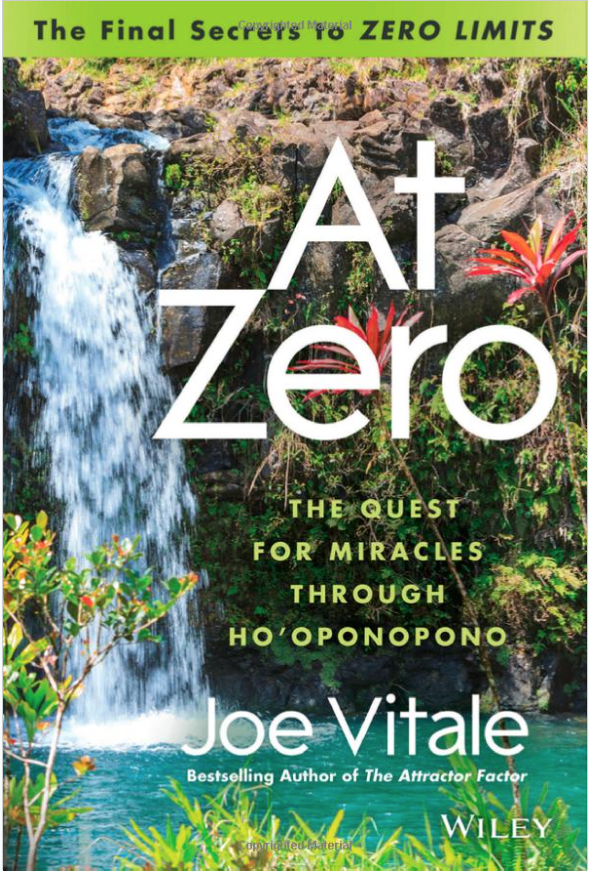
In 2014, Joe Vitale wrote the follow-up book, “At Zero.”  This is also a wonderful book.   It seems to go just a step further than “Zero Limits.”  Although I have probably not done them justice with my short description, I highly recommend both of these books.

Screen Shot 2014-11-16 at 8.02.07 PM