THE ABUNDANCE BOOK

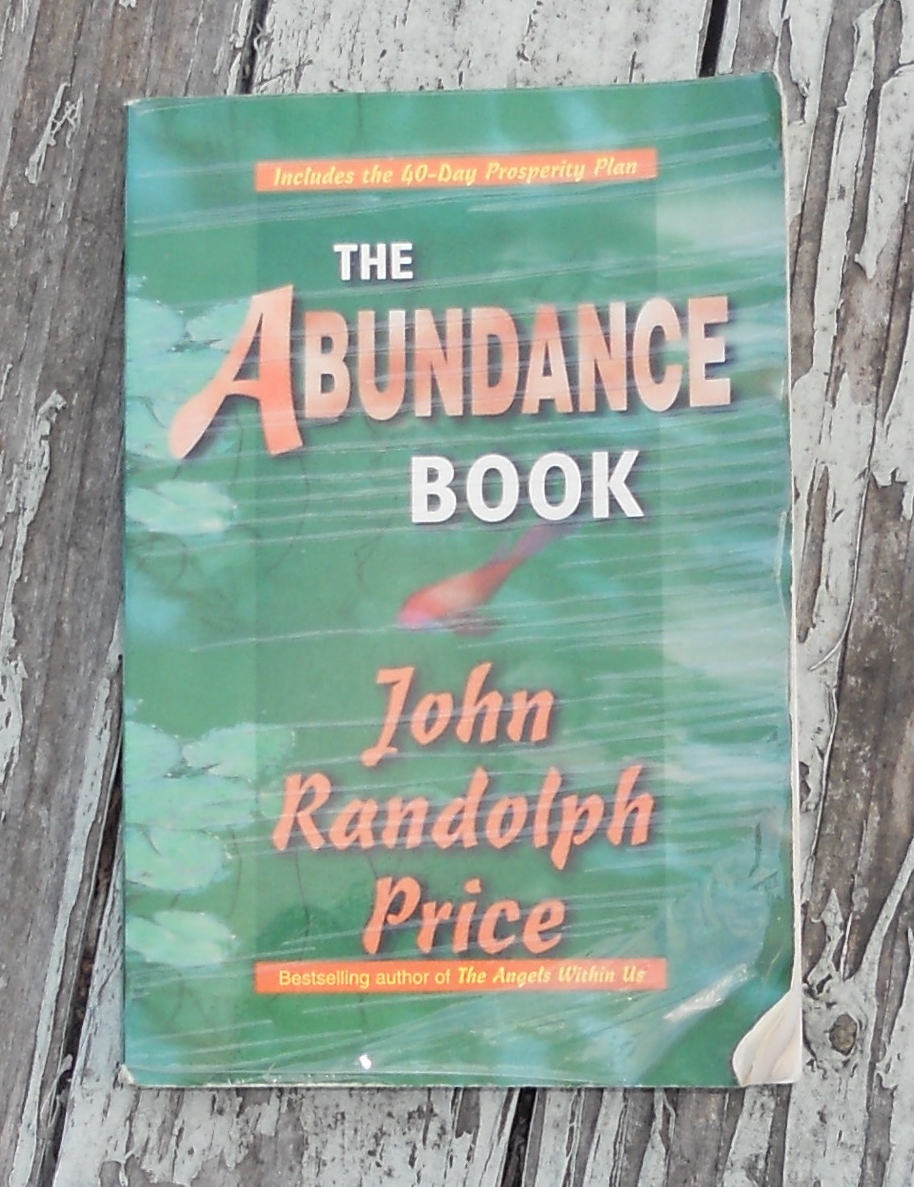
What this book lacks in size, it makes up for in its message.  As this is my copy, and I use it every day, please excuse the fact that it is slightly shabby.  I do not remember how I came to own this book, or how it came to own me, which is probably more accurate.  (Funny how all of the books I written about so far all fall into that same category, the one where, really, they ‘own’ me. )  Anyway, I’ve had this book at least 10 years and ever since the first time I read it, I’ve used the 40-Day Prosperity Plan on a daily basis.


DSCN3700


From the INTRODUCTION:

“Since the beginning of the civilized world, enlightened ones have taught that prosperity is a part of the natural process of life – that lavish abundance is the unquestionable nature of each individual.  And through the centuries, countless men and women accepted this truth, realized the law of plenty within and moved above the illusion of scarcity into the reality of unlimited wealth.  They proved for themselves that the energy of abundance is constantly radiating from the Source within and flowing out to appear as money and financial well-being.

What one has done, all can do.  The secret is to be aware of this unfailing principle, to understand that lack is simply the out-picturing of false beliefs, and to know that as you make the correction in consciousness, you will become a channel for the activity of ever-expanding affluence in your life.

This material certainly isn’t the last word on the subject of supply.  However, if you will practice the principles and dedicate yourself to opening the consciousness to the infinite riches within, it will not be long before you awaken to your divine inheritance.  And with each awakening, more of the error patterns of lack and limitation are erased from the collective consciousness.  The good of the whole does begin with each individual.”

Does it work?  Yes, I’d say it does.  As with anything, whatever we believe is true for us.  As the author, John Randolph Price says, “…the 40-Day Prosperity Plan is an effective process in changing consciousness from a vibration of limitation to one of abundance.”

Although John Randolph Price is the author of 18 nonfiction and 3 fiction books, this is the only one I’ve read.  He died this past July.  He was 82 years old.


AN ABUNDANCE OF GRATITUDE

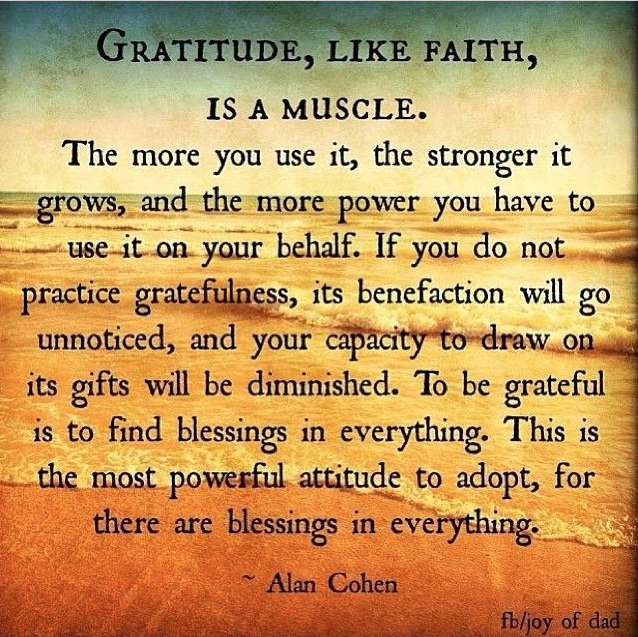
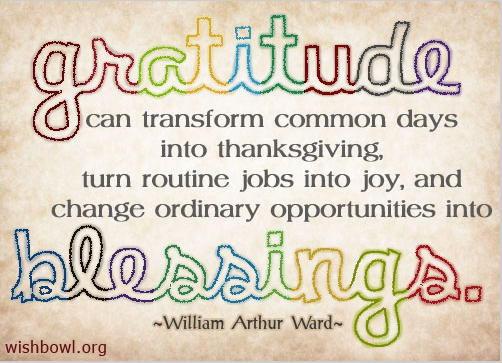
Although today is Thanksgiving (in the United States), I am grateful every single day of my life.  I have fought long and hard to get where I am.  It has been incredibly difficult at times, and I wondered on many occasions if I would make it,  BUT I have.  Each night before I go to bed, I write five things in my journal that I am grateful for that happened that day.  I’ve been doing this for a couple of years, and I have to admit, I look forward to it.  During the day, I am always on the lookout for things to be grateful for.  Some times it is something big and important; other times, it may be as simple as penny I find on the street.  Having an attitude of gratitude really does make a difference.

Screen Shot 2014-11-26 at 8.04.17 PM

Screen Shot 2014-11-26 at 8.02.45 PM Screen Shot 2014-11-26 at 8.01.57 PM Screen Shot 2014-11-26 at 8.00.56 PM Screen Shot 2014-11-26 at 8.00.08 PM


Screen Shot 2014-11-26 at 8.05.20 PM                             (the above artwork/poster was done by Jodi LeBlanc)


NO WORDS FOR JUST HOW DISTRESSING THIS IS TO ME

I am forgoing my usual book recommendation today to briefly address the latest news story…

“What the Cosby uproar says about how far we’ve come
Simply put, the facts haven’t changed — or at least not by much. But we have.
 By Lisa Belkin

This originally appeared on Friday, 21 November 2014 in Yahoo News:

Why did it take 30 years? That’s the question Barbara Bowman, one of the 15 women to level sexual assault allegations against Bill Cosby, asked in her essay in the Washington Post this week.  And it is a pivotal question, because the answers speak loudly to what has changed in our culture — and what has not — when a powerful man is accused of rape.
Cosby’s history of allegedly drugging young women and then forcing them to have sex has been an open secret in Hollywood for decades. The alleged rapes themselves are said to date back to the 1960s. Cosby has included jokes about drugging young women to make them amorous since 1969 — something called Spanish Fly played a surprisingly big role in the public imagination back then — jokes he repeated live to Larry King in 1991. The attempts by victims to make themselves heard began more than a decade ago.
Former model Janice Dickinson now says she tried to write about being assaulted by Cosby in her 2002 memoir but was convinced by her publisher, under pressure from the Cosby camp, to leave her most devastating accusations out. Tamara Green, a California lawyer, told her story on the “Today Show” in 2005 when she was only the “second Cosby accuser.” But there were no consequences for Cosby, and Matt Lauer all but apologized to viewers for doing the interview in the first place. The following year, 13 women were scheduled to testify to their separate tales of drugs and sex in a civil suit brought by Andrea Constand, but she settled with Cosby in 2006 for an undisclosed sum. Over the past two weeks the charges have snowballed, and Cosby has found himself on his heels as Netflix, NBC and TV Land all dropped planned projects featuring him or decided to stop airing some of his existing work.
The question is: Why now? What is it about this particular moment that has given this old news not only attention, but explosive, insistent, unrelenting traction?
The obvious but incomplete explanation is the Internet. Comedian Hannibal Burris was not the first to strike out at Cosby this fall, when in October he delivered a scathing standup routine calling the 77-year-old comedian a rapist. That honor went to the many reviewers of a biography of Cosby by former Newsweek editor Mark Whittaker, whose glaring omission of even a mention of the rape allegations in his 500-page book came in for withering criticism a month earlier. But the Internet was key, and the Cosby camp’s online response to viral video of Burris’ routine inadvertently fanned the flames, offering up a meme generator that, while meant as a way for viewers to show support (and to laugh off the charges as Cosby had successfully done in the past), quickly itself became a source of rape jokes.

But why did Burris’ comments go viral? Why did the Cosby rape meme take hold? What led so many to Share and Like and Comment in outrage when the very same charges had failed to resonate before?  Simply put, the facts haven’t changed — or at least not by much. But we have.

For decades, those who accused Cosby did so in the context of a world inclined not to believe them. Against a backdrop that saw “he said/she said” and deemed it just too complicated to sort out, and therefore looked away. At a time when good people, if pressed, would admit that they just couldn’t believe that a woman wasn’t somehow encouraging a man, particularly a powerful “catch” of a one.  Cosby, after all, wasn’t the only famous man we knew about but didn’t want to know.  Look at the allegations against singer R. Kelly, meticulously documented 15 years ago by the Chicago Sun-Times but essentially ignored by every other news outlet. And Lauer was not the only journalist who found it uncomfortable to air the Cosby charges. Atlantic writer Ta-Nehisi Coates, known for saying it as he sees it, profiled Cosby in 2008 and did not mention the allegations even though, he says now, “I believed Bill Cosby was a rapist.”  That Coates is publicly apologizing for his lapse now (“I don’t have many writing regrets. But this is one of them”); that the Village Voice is taking up the cause of R. Kelly’s alleged teenage victims anew; that Dominique Strauss-Kahn looks like he will actually stand trial, for “aggravated pimping,” after being repeated accused by women but not the legal system; that Canadian radio star Jian Ghomeshi was fired after several women said publicly that he’d sexually attacked them — all these are signs that something is different.

Now we accept that the football player who says “she fell and hit her head” can be proved wrong by the videotape. Now we have heard — really heard — the voices of too many college women telling us they don’t feel safe from their classmates on campus. Now we see the same facts differently. As Hanna Rosin wrote in Slate, “now that we know what we know, or, perhaps now that we know it at a time of heightened awareness about sexual assault….”
It is the way of history. Good people used to think one thing and then come to think something else. Often dismissed as political correctness, it is actually simple progress. And it is slow.  In the “we have come a long way but not far enough department,” there are still plenty of examples. Take the president of Lincoln University, Robert R. Jennings, who recently told a gathering of female students that rape allegations were too often lies by “young women who after having done whatever they did with young men, and after it didn’t turn out the way they wanted it to turn out, guess what they did? They then went to Public Safety and said, ‘He raped me.’” Jennings warned the women to remember that a rape charge could ruin a poor young man’s life because he might actually go to jail. That a man might actually have committed a crime and that the actual conviction rate for rapes on campuses is shockingly low seemed of little concern to Jennings.
That was in September — so stupidity and victim blaming are not completely relics of the past. But because of the Internet, students and parents easily shared the video (now there’s always a video) of Jennings’ speech. And because of the evolving public understanding of rape, there was outrage at that video, along with demands that Jennings resign. Add to that the new federal regulations that Jennings refers to, which give teeth to the requirement that schools report campus sexual assault charges to the authorities instead of continuing to handle them internally, and quietly.
There are growing expectations that Cosby should face consequences as well. Not legal ones, because the statute of limitations has expired, but perhaps other punishments, and pulling his body of work, past and future, from the airwaves is the first of those. TV Land’s decision means that 30 years after “The Cosby Show” debuted, nearly half a century after the first alleged incident, and more than a decade after the first public allegations were made, it became time for Cosby to pay a price.  He is still scheduled to appear in Florida tonight, but it’s a safe bet he won’t be making any Spanish Fly jokes. Times have changed. And so has the way his audience will hear him.”

I do have a lot to say about this, but, for the time being, I am still coming to grips with how to express what I really think about it.  For now, all I’ll say is my heart goes out to those women who have had to live with this for so long.

Something has got to change.


HERE, TAKE A PILL

Why is it, generally speaking, that Western medicine tends to throw pills at the symptom and not get to the underlying condition that may be causing the problem to begin with?  Is it because we are lazy and want a quick fix?  Is it decades of training doctors in a certain way?  Is it an inability to change with the times?  Is it fear of some kind?

Don’t get me wrong, I myself took an antidepressant because I needed it to get my chemical imbalance, well, balanced.  I suffered for years from depression and/or clinical depression, and it had gotten to the point that even though I so did not want to take it, I knew I had to.  I fought it for a long time, but when I was in Key West in the bright February sunshine, out of the frigid Chicago winter, and I was still feeling awful, I knew the time had come.  At the time, I was seeing a therapist and he recommended a psychiatrist to me.  I reluctantly went.  The deal was I would continue with my therapist and I would see the psychiatrist once a month.  I made sure my doctor knew from the very beginning that I had no intention of staying on the medication indefinitely.  I asked how long I would have to take it.  My doctor told me, and keep in mind this was in 1997, usually people took it for about a year, maybe a little longer.  I said, okay, but I’m not taking it any longer than that.

At the time I was trying to get pregnant and, again keep in mind it was 1997, at the time the only antidepressant that was approved for and that had been tested on pregnant women was prozac.  So that’s what I was given.  Pretty sure I’ve mentioned this before, but it nearly killed me.  Every bad side-effect it was possible to get, I got.   I know now I should never have been given it at all, since I am in the bi-polar spectrum, and prozac is a huge no-no.  Not sure if this wasn’t known back then or that my doctor just dropped the ball, in a way.  It doesn’t really matter.  What matters is I was closely monitored and switched to wellbutrin as soon as it became clear that I was on the wrong medication.

What I find astounding is the number of people, mostly women, who have been on antidepressants for years.  YEARS!  And they have no intention of ever getting off of them.  I understand that there are legitimate reasons for being on a drug long-term, maybe even forever; but, mostly, I don’t believe this to be the case.  (Bi-polar disorder is a different story and those with it should take medication, though many don’t/won’t.)  I could not wait to stop taking it, even after finding the correct one for me.  It was a hateful drug, and though it accomplished what I needed, the re-balancing my chemicals, I was not sorry when I no longer had to take it.

And these days the hottest new ‘disorders’ to be diagnosed with are ADD and ADHD.  In the November issue of Oprah, an article written by Anna Maltby addresses this phenomenon, and it is alarming.  “A groundbreaking report released earlier this year by the prescription management company Express Scripts stated that the number of adults in the United States taking ADHD medications (which include Ritalin and Concerta, in addition to Adderall) rose 53 percent from 2008 to 2012.  It also found that women are using ADHD medication at notably higher rates than girls, with those in the 26 to 34 age range posting a staggering 85 percent jump in the use of such drugs in just five years.” According to ADHD researcher Keith Connors, PhD, professor emeritus at Duke University and the creator of a highly regarded rating scale commonly used to help diagnose the disorder, “It’s clear that one reason for the recent rise is over diagnosis.”   He goes on to say that, “There is a swarm of primary care doctors and psychiatrists who really don’t know that much about ADHD but are willing to give out a prescription.”

According to webmd.com:

“Attention deficit hyperactivity disorder (ADHD) is one of the most well-recognized childhood developmental problems. This condition is characterized by inattention, hyperactivity and impulsiveness. It is now known that these symptoms continue into adulthood for about 60% of children with ADHD. That translates into 4% of the U.S. adult population, or 8 million adults. However, few adults are identified or treated for adult ADHD.

ADHD in Adults
Adults with ADHD may have difficulty following directions, remembering information, concentrating, organizing tasks, or completing work within time limits. If these difficulties are not managed appropriately, they can cause associated behavioral, emotional, social, vocational, and academic problems.

Common Behaviors and Problems of Adult ADHD
The following behaviors and problems may stem directly from ADHD or may be the result of related adjustment difficulties:

Anxiety
Chronic boredom
Chronic lateness and forgetfulness
Depression
Difficulty concentrating when reading
Difficulty controlling anger
Employment problems
Impulsiveness
Low frustration tolerance
Low self-esteem
Mood swings
Poor organization skills
Procrastination
Relationship problems
Substance abuse or addiction”

(After reading the list above, I doubt there is anyone on the planet that doesn’t suffer from several, if not most, of them.  Doesn’t mean you need to be medicated, though.)

Okay, the truth is I probably had/have ADHD, but even if this is the case, I have learned how to manage in spite of it.  I have a friend who kind of makes fun of me because I have, in her words, a very rigid routine.  What I now understand is, in order for me to function at the level I need to, to be able to be self-employed, it is imperative that I have a fixed routine.  I don’t consider it to be rigid, but I do my best to stick with it on a daily basis, otherwise nothing gets done.  Or at least not a lot gets accomplished.  Would a drug like Adderall help me?  Maybe, but I prefer to have my ‘rigid’ routine.  And let me say again, I do believe there are people who legitimately need to be on one of these drugs.  At the same time, I believe that many are misdiagnosed/overdiagnosed by physicians who simply do not know enough about it.

I feel like there are so many other available choices, such as diet, exercise, therapy, that may help, if not alleviate the problem all together.  Ultimately, though, we each need to do what we decide is best.
 

ZERO LIMITS

I love you, I’m sorry, Please forgive me, Thank you…these four statements are the essence of ho’oponopono.

“Ho’oponopono is a profound gift that allows one to develop a working relationship with the Divinity within and learn to ask that in each moment, our errors in thought, word and deed or action be cleansed.  The process is essentially about freedom, complete freedom from the past.”  This statement was written by Morrnah Nalamaku Simeona, creator of Self I-Dentity Ho’opononpono, and named a Living Treasure of the State of Hawaii in 1983.

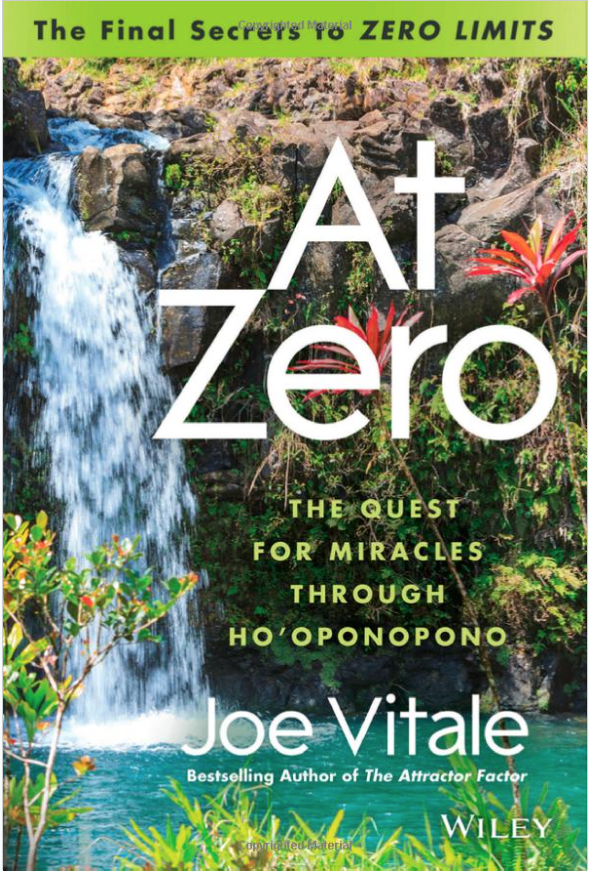
In collaboration with Ihaleakala Hew Len, PhD., Joe Vitale wrote ‘Zero Limits in 2007.  As with a lot of the books I have read (and re-read) and that have had a positive impact on my life and my personal and spiritual transformation, I did not become aware of this book until several years after it was published.  I do not even recall how I ‘found’ it, or more accurately, how it found me.  All I really know is I love this book.  It resonated very deeply within me, and I clearly remember the first time I recited I love you, I’m sorry, Please forgive me, Thank you and the absolute feeling of peace that settled over me.  I have successfully change the tape that runs in my head to I love you, I’m sorry, Please forgive me, Thank you.

As Dr Hew Len explained, “Simply put, ho’oponopono means, ‘to make right’ or to ‘rectify an error.’  Ho’o means ’cause’ in Hawaiian and ponopono means ‘perfection.’  According to the ancient Hawaiians, error arises from thoughts that are tainted by painful memories from the past.  Ho’oponopono offers a way to release the energy of these painful thoughts, or errors, which cause imbalance and disease.”

Screen Shot 2014-11-16 at 7.48.30 PM


In 2014, Joe Vitale wrote the follow-up book, “At Zero.”  This is also a wonderful book.   It seems to go just a step further than “Zero Limits.”  Although I have probably not done them justice with my short description, I highly recommend both of these books.

Screen Shot 2014-11-16 at 8.02.07 PM

ALLIGATOR SKIN

You know how babies have really soft, smooth skin?  Well, that wasn’t me.  My mother said my skin was like an alligator:  rough, dry and scaly.  Lovely.  Then it was discovered I was allergic to water.  Yes, water!  Turned out it wasn’t so much water as it was the high mineral content of our water.  In any case, I had to be given a bath in a special solution, not like normal babies who got bathed in, well, water.  Clearly, I was never normal, right from the beginning.  My skin condition was never diagnosed.  It was kind of like psoriasis, but that wasn’t it.  No name was ever given to what I had.

Truthfully, I don’t remember how it affected me until I was a teenager., when it got really bad.  The red, horribly itchy rash was on the underside of my forearms and my hands.  Nothing helped, but a lot made it worse.  I was not allowed to do the dishes or clean the bathroom, and as wonderful as that might sound, it was a real pain.  Even gloves did not help, and actually made it worse because of the heat.  I made little splints with tongue depressors (having a mother who was a physician came in quite handy at times) and band-aids that I would fill with either Crisco (hey, it worked and have no ingredients that irritated my skin further) or vaseline and slip over my fingers.  If I didn’t do this, my hands would bleed.  My skin was so dry that no amount of lotion worked, but my ‘invention’ with the vaseline helped.

Not much could be done to help my forearms, though.  To help relieve the itchiness of them, I would use scalding hot water, which was really bad for it, but it was the only thing that made them stop itching, if only for a little while.  I also had the rash in my elbow pits and my knee pits.  Since I was told not to scratch myself with my fingernails, I used my hairbrush, and at night, since I would do it unconsciously in my sleep, I had to wear cotton gloves.  I guess I was kind of a mess!

At one point, when I was about 12 years old, it was so bad that I got taken to the doctor.  As this was not my mother’s specialty, and there was only so much she could do anyway, I went to a dermatologist.  I showed him all the places I had it on my body, and he said that he needed to look at my entire body to make sure it wasn’t any place else.  I knew it wasn’t anywhere else, but he insisted.  This was incredibly upsetting to me, and I went out into the waiting room to tell Mark, my brand new step-father, that the doctor wanted me to take all of my clothes off and I didn’t want to because I knew it was only where I had already shown the doctor.  Mark told me to listen to the doctor.  I was 12 and had developed early (most guys thought I was 20 years old because of my body) and because I was 12 and had the body of someone much older, I sure did not want this doctor seeing me naked.  I cried the whole time he was looking at my naked body, and when he finished, he said, “You don’t have the rash anywhere else.”  No shit, Sherlock!  Even now, thinking about it pisses me off.  It was, and probably still is, so typical of adults not to listen to a kid, and I can’t help but think it was a thrill for him to look at me naked.  Anyway, I was traumatized by this trip to the doctor and it just made me less likely to go again.

As I got older, I still had issues with it, but, eventually, I started growing out of most of it.  I did have an incident in my mid-20s while living in the suburbs of Chicago.  This was before they had Lake Michigan water.  It was well-water, and as it turned out, it had a very high mineral content.  This time I had it on my face and in my eyes.  What made this especially bad is I was modeling at the time and I looked a little like I had poison ivy all over my face–not a good look.  That time I went to the doctor and was given actifed, something I had taken as a child, though I had forgotten about it until then.  It is an antihistamine, basically. He also gave me cetaphil, which was not available at that point, except from a dermatologist.  He told me it was for people who are allergic to animal, mineral and vegetable fats.  Well, dang!  It worked though, and that was the important thing.  I still use cetaphil to this day.

I still have really dry skin and hair, but I’ve recently discovered a cure for it.  Olive oil!  I eat a tablespoon of it almost every day.  It has worked so well that I even gave myself oily hair, which I wasn’t happy about because it means I need to wash my hair more often.  I used to wash it once a week.  Now, I have to wash it every few days, though I probably should do it more often than I do.   But, luckily, even when my hair is dirty, it doesn’t look it.  And my skin is sooooo soft.  I mean, the baby soft I never, ever had.  And for the most part, I don’t have rashes anymore.  The only exception is when it’s really hot, I can still get it in my knee pits.  After all this time, though, when someone tells me I have beautiful skin, I probably look at them like they are crazy.  I do say, thank you, but inside, all I can think is, if they only knew!  Fortunately, the internal ‘scars’ don’t’ show and, for the most part, other than having an intense dislike of doctors, I am happy in my skin!

TIME CHANGE

Most everyone set their clocks back an hour this past Sunday.  It is my favorite day of the year.  Whenever I tell people this, they look at me like I’ve lost my mind.  The reason it’s my favorite day is the day seems endless.  Or at least it used to when I’d wake up at my usual time, but instead of it being 5a, it was now 4a, and I’d get up and walk for 2 hours, which is 8 or so miles, and when I’d get it home, it was only 6a.  The entire day would go like that.  It would seem so much later and it would only be, like 10:30a.  Now, though, because I don’t really walk in the dark anymore, when I wake up super early, I don’t want to get up, because, really, what am I going to do?  This last Sunday, I woke up and realized I couldn’t get up and walk, not because of the darkness, though it wouldn’t be that way for long, but because I have beach yoga on Sunday mornings at 9:30 and I walk to it, which is about 2 miles.  And then afterwards I walk home.  So I am getting a nice walk and yoga, and a 4-6 mile walk before that seemed silly.  So I went back to pretend sleep.  Pretend sleep is what I do when I don’t want to get out of bed because it’s either dark or cold or both.  I’m beginning to think I was a bear in a past life, and that’s why all I want to do these days is hibernate.

It is very strange, but before the time changes, and before we have nighttime temps in the 50s, I have no problem getting up.  Now, it’s a completely different story.  I so do not want to get out of bed because it’s cold, freezing actually, in my house.  It doesn’t help that I have to sleep with my ceiling fan on to help with my stupid hot flashes, so not only is the house cold (no insulation, typical in old California houses) because it’s cold outside, I have the extra breeziness from my fan making it even colder.  In past years, I used to sleep with my workout clothes on so that all I had to do on our chilly mornings was put my shoes on, that way avoiding being naked to get dressed.  If I tried that now, I would cook myself, even without the electric blanket because of those stupid hot flashes I already mentioned.  It is quite a dilemma.

I also realize that any of you reading this while living someplace other than Southern California, someplace where it is actually cold, will probably be rolling your eyes and saying this isn’t cold.  I’ll be the first to agree that it isn’t cold, but I am the world’s biggest wimp when it comes to being cold.  Besides, it’s all relative.  I lived in Chicago for 10 years, so I definitely know cold, and this is, of course, nothing even close to that.  However, it’s cold for here and especially after the really hot weather we have had since we began May with 2 separate heat waves.  And this week it is hot again.  I know, I know, poor us, right?  Well, if you lived here, you’d understand.  This picture I found on Facebook might help explain it a little better:

Screen Shot 2014-11-04 at 7.18.03 AM

And I am not afraid to say I did this on Tuesday.  And I wore two jackets to beach yoga.  Of course, once I got over to the beach and into the sunshine, it was warmer. Clearly,  it doesn’t bother me to look like a dork.  I would have worn my slippers, but I don’t want to get sand in or on them.

I digress…back to the time changing…I’ve decided that it may no longer be my favorite day of the year.  I love that it is light earlier, but I do not like that it is dark by 5:30p and that will only get worse until we reach 21 December, which by the way is not the shortest day of the year.  It may be the day with the least amount of daylight, but every day is 24 hours, regardless of the light or lack thereof.  Anyway, getting up when it is dark and cold is just too much for me.  And I do it anyway.  Just this morning (and Tuesday) I met a friend to walk at 5a.  According to my phone it was 61 degrees, though my thermometer said it was about 10 degrees colder.  I didn’t look at it until I got back though, so thinking it was above 60, I wore a skort.  I was fine because we walk fast.  Now, though, I am trying to decide if I can keep it on or if I should put yoga pants on; not long pants, mind you, because it isn’t that cold…yet.   I am sitting here, wrapped in a blanket, freezing, while writing this, but it is sunny outside and going up into the high 80s again today, so even if it is little chilly on my bike ride over to the beach, the actual beach should be warm enough.  I know I have tough decisions to make, but someone has to live here and deal with this kind of stuff on a daily basis!

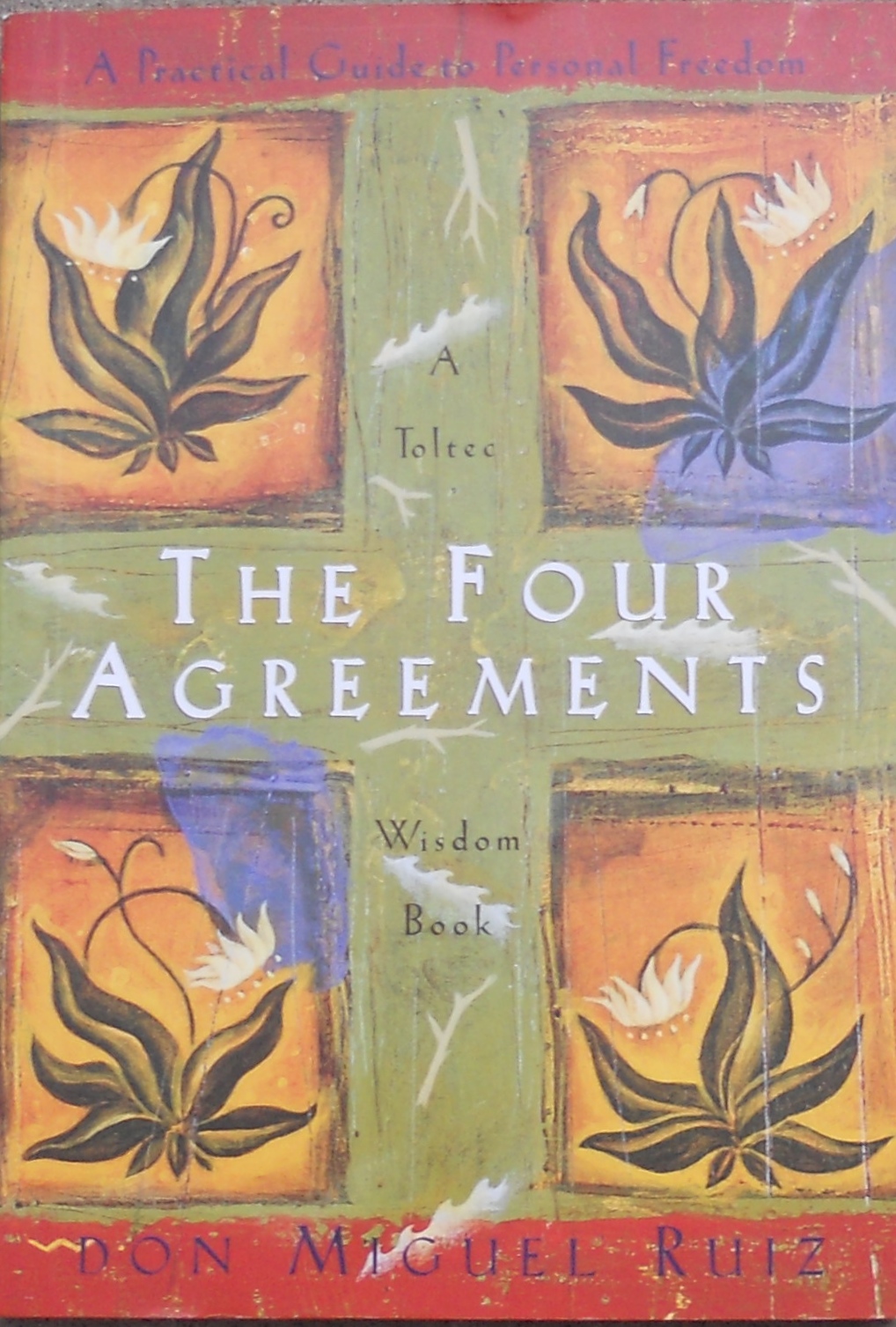
THE FOUR AGREEMENTS – A TOLTEC WISDOM BOOK

I loved this book when it was first given to me shortly after I did the Hoffman Process.  I then bought and gave it to everyone I knew.  I have read it many times and now even have it from audible.com.  Just as with any other book, listening to it is a whole other experience.  Since I love being read to, it’s perfect!

The Four Agreements are:

“BE IMPECCABLE WITH YOUR WORD  Speak with integrity.  Say only what you mean.  Avoid using the word to speak against yourself or to gossip about others.  Use the power of your word in the direction of truth and love.

DON’T TAKE ANYTHING PERSONALLY  Nothing others do is because of you.  What others say and do is a projection of their own reality, their own dream.  When you are immune to the opinions and actions of others, you won’t be the victim of needless suffering.

DON’T MAKE ASSUMPTIONS  Find the courage to ask questions and to express what you really want.  Communicate with others  as clearly as you can to avoid misunderstandings, sadness and drama.  With just this one agreement, you can completely transform your life.

ALWAYS DO YOUR BEST  Your best is going to change from moment to moment; it will be different when you are healthy as opposed to sick.  Under any circumstance, simply do your best, and you will avoid self-judgement, self-abuse and regret.”

Simple enough, yes?  Well, maybe simple, but not necessarily easy to do.  Any yet I know that when I actually practice these 4 agreements, I am much happier.  The book, though relatively short, is quite powerful; and I’ve also found, the more I read it, the more likely I am to remember the agreements and to live by them.

DSCN3591

The author, Don Miguel Ruiz, has also written several other books, which are also good: “The Fifth Agreement,” “The Mastery of Love” and “The Voice of Knowledge,” among others.  All are just as insightful and inspiring, though my favorite remains “The Four Agreements.”

WE NEED TO STOP ‘SHOULDING’ OURSELVES

I almost titles this “WE SHOULD STOP SHOULDING OURSELVES,” but irony aside, it seems to be something we all do.  I should do this; I should do that.  I should be thinner or prettier or richer.  I should be further along in my career; I should workout more or meditate or journal.  I should go to college or I should drop out.  I should work fewer hours or I should work more.  I should change jobs or I should just plain quit my job and become a lady/gentleman of leisure.  Should, should, should!  With all this shoulding going on, it’s no wonder we feel such discontent, like we aren’t living up to our potential.

The dictionary on my iMac defines SHOULD as:

1 used to indicate obligation, duty or correctness, typically when criticizing someone’s actions: he should have been careful | I think we should trust our people more | you shouldn’t have gone.   2 used to indicate what is probable:  $348 million should be enough to buy him out | the bus should arrive in a few minutes.  3 formal expressing the conditional mood.  –(in the first person) indicating the consequence of an imagined event:  if I were to obey my first impulse, I should spend my days writing letters.  –referring to a possible event or situation: if you should change your mind, I’ll be at the hotel | should anyone arrive late, admission is likely to be refused.  4 used in a clause with “that” after a main clause describing feelings: it is astonishing that we should find violence here.  5 used in a clause with “that” expressing purpose: in order that training should be effective it must be planned systematically.  6 (in the first person) expressing a polite request or acceptance: we should be grateful for your advice.  7 (in the first person) expressing a conjecture of hope: he’ll have a sore head, I should imagine | “It won’t happen again.” “I should hope not.”  8 used to emphasize to a listener how striking an event is or was: you should have seen Marge’s face.  

According to Dictionary.com: should is the simple past tense of SHALL.  And SHALL is defined as 1 plan to, intend to, or expect to: I shall go later.  2 will have to, is determined  to, or definitely will: You shall do it.  He shall do it.  3 (in laws, directives, etc.) must; is or are obliged to: The meeting of the council shall be public.  4 (used interrogatively in questions, often in invitations): Shall we go?

In the end, though, what it comes down to is how we talk to ourselves.  Reading through the definitions, it seems clear to me that SHALL is a much kinder, gentler way of expressing a desire or wish, especially if it is to ourselves.   No one likes to be told what to do, so why do we think it’s okay to should ourselves?  If someone is telling you that you should do this or that or you should go here or there, are you more likely to disregard, ignore or reject what they are saying because of how they are saying it?  My guess is a big fat YES.  It’s the same when we talk to ourselves, even if we aren’t aware of it.  What we say and how we say it to ourselves is just as important, if not even more so, than how we speak to others.  And while it is always a good idea to be kind to everyone, being kind to ourselves is crucial.

I think that for a long time self-love or self-care was seen as selfish.  This is the exact opposite of what is actually true.  If we don’t love, take care of and approve wholeheartedly of ourselves, we cannot do it for others, not really.  I am the most important person in my life, just as you are the most important person in your life.  It cannot be any other way.  This is true whether you are single or married, have children or not.  If you are not happy in and with yourself, you will have nothing to give another.  This is not selfish.  I’m sure you’ve heard the expression about not being able to give what you don’t have.  This is the same idea.  It is all well and good to want to accomplish your intentions, dreams and goals, so why not do it in a kinder way?  Kinder to yourself.  Speak to yourself the way you would to a child.  You (hopefully) would never yell at or berate a baby because of what he or she was unable to do, so why would you treat yourself any differently?

To me, shoulding ourselves is a good place to start, and by that I mean,  STOP SHOULDING YOURSELF!  You are where you are because of the choices and decisions you made yesterday.  If you don’t like where you are, make different choices.  It’s all up to you.  When you use the word should, as the definition says, it typically is a criticism of what you did or didn’t do.  Who likes to be criticized?  As Maya Angelou said, “Do the best you can until you know better.  Then when you know better, do better.”  We now know better.  We know how powerful words are and the way in which they are said can either help or hurt.  Make sure the words you say, especially to yourself, are loving and kind.


GROWING INTO GRACE

A long time ago I read a quote that said something to the effect of, If you want to be a writer, you have to write.  I do write, every day, in my journal, and once a week I post on this site.  I’ve decided to challenge myself and up that to twice a week.  So, my intention now is to post on Wednesdays and Sundays.  At the beginning of this year, one of my New Year’s resolutions was to post every week.  I’ve done pretty well on that, only missing a few weeks.  Now, though, I feel like the time has come to step it up.  A part of the reason I missed the weeks that I did was not having a topic already in mind.  Now I have a big list, and one of the topics on that list is Books That Have Made A difference In My Life. Instead of simply making a list of those books, I will do a separate post on each one for the next 20 or 25 weeks, or however many there actually are.  This week starts with “Daily Love: Growing Into Grace” by Mastin Kipp, founder of TheDailyLove.com.

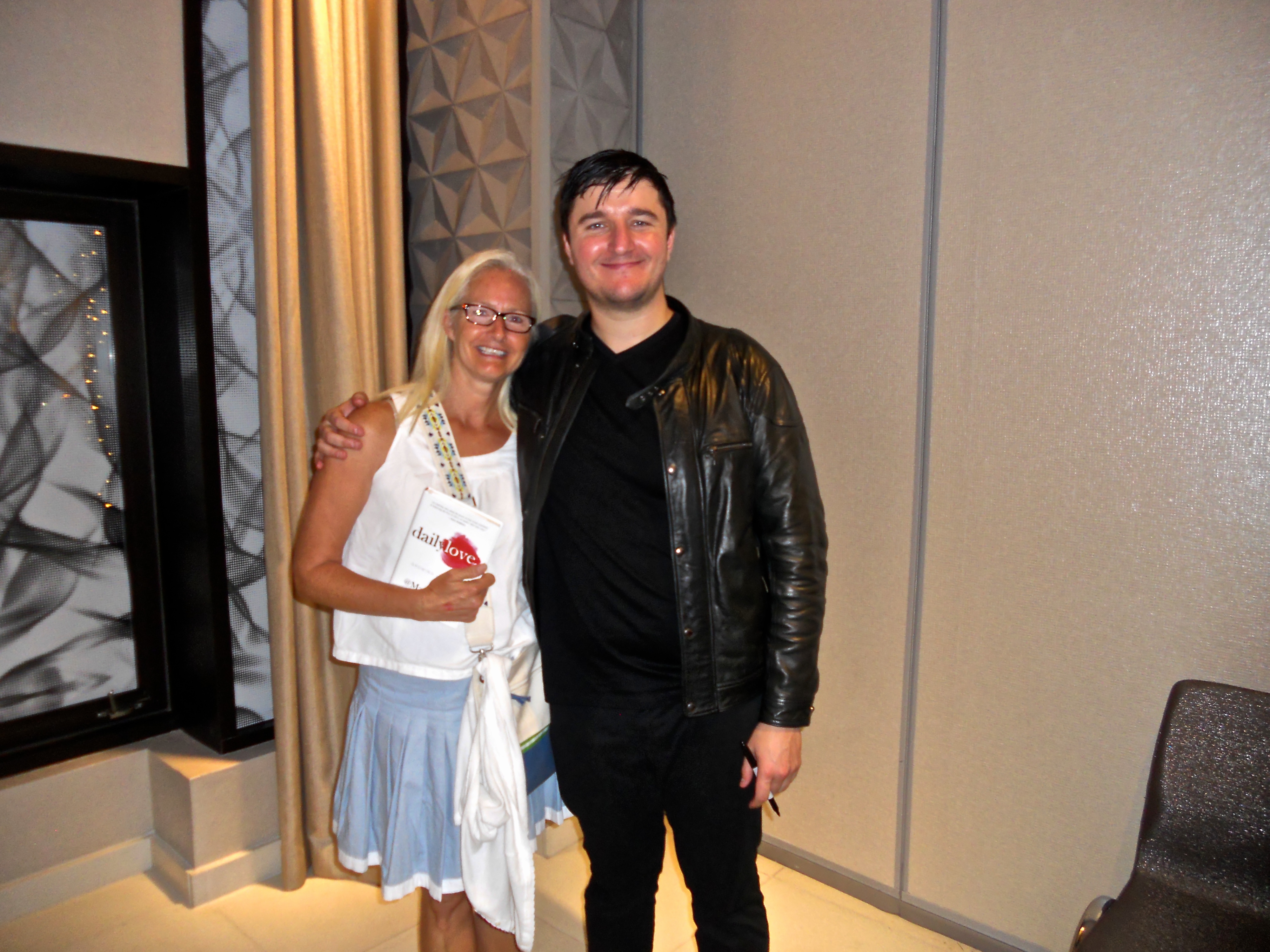
Last Wednesday evening I had the opportunity to attend Mastin’s book signing/mini-seminar at the W Hotel in downtown San Diego.  What an awesome night!  And I have to say that he is the reason for my deciding on writing an additional post each week. He took us through a meditation/breathing exercise designed to help us figure out what might be holding us back from living our individual best lives.  He’s big on action, not just concept.  My action step is to write more, which translates to posting twice a week from now on.

Because he is so passionate about his message and his desire to help others, I experienced him as a very powerful speaker  He is also very insightful and “knows a thing or two about the crisis-to-Grace cycle,” as Mastin calls it.  He defines Grace as “unearned Divine favor, as God’s YES to you.”    From the dust jacket of his book…”Mastin’s mission is to reconnect people with what makes them happy.  Happy people make better choices, and better choices make for a better planet.”  Like I said, I have only read the first two chapters, but am really looking forward to the rest.  As Tony Robbins said, “I’ve watched Mastin transform from rock bottom to someone who turned his life around and is making a massive impact on the world.  His book, DAILY LOVE: GROWING INTO GRACE, is an inspiring story about the power of truly being committed to improving the lives of others, no matter what may come.”  Pretty high praise, indeed!

At the end of the evening, he was gracious enough to sign everyone’s book and to pose for a picture:

DSCN3482